


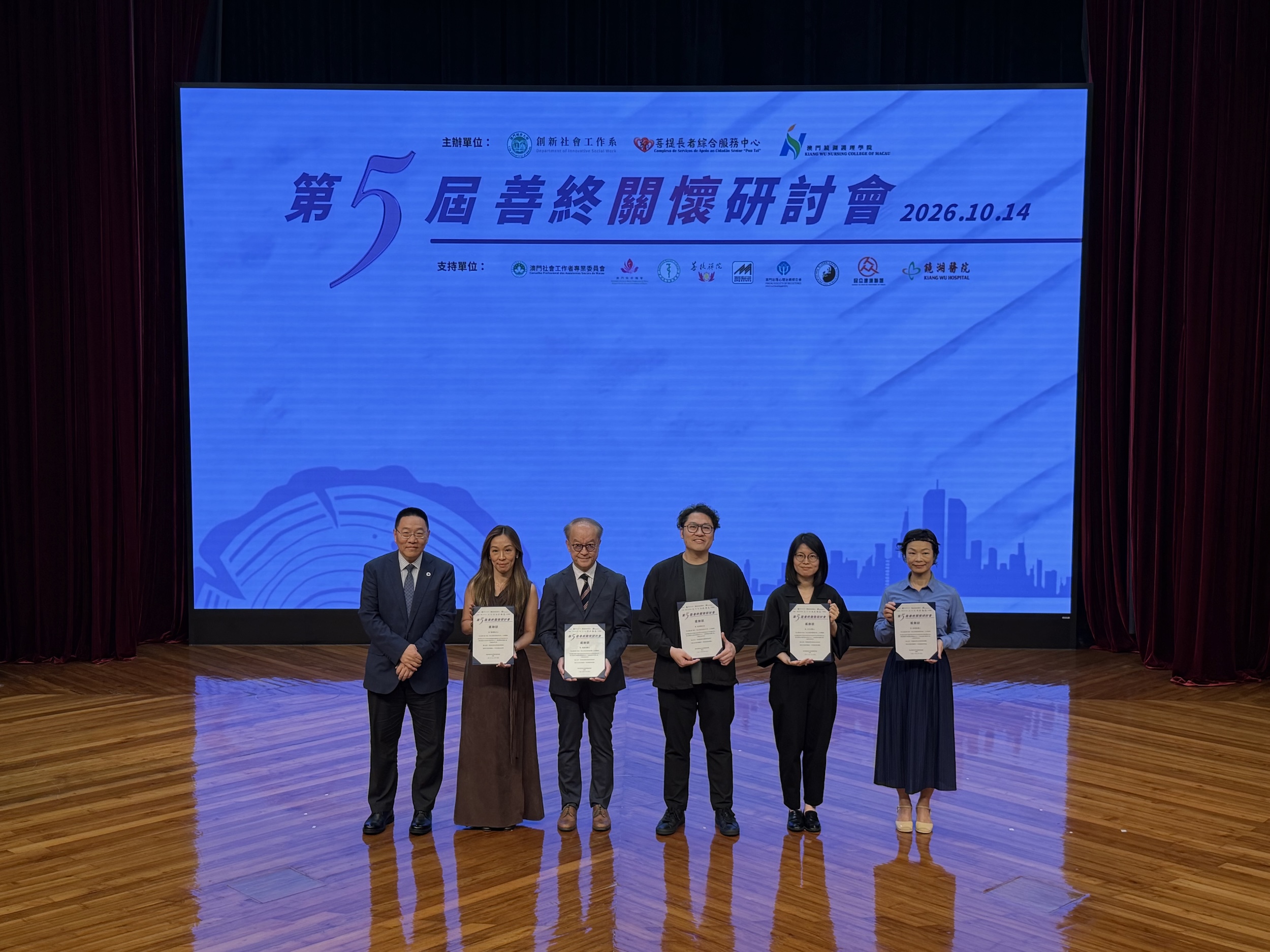
Professor Sun Pei, Executive Associate Dean of the Faculty of Health and Wellness of City University of Macau, presented certificates of appreciation to the keynote speakers. From left: Sun Pei, Cheang San San, Choi Yuen Ning, Leung Tsz Tun, Wang Wenjin, Hu Xiaoxia.


The 5th End-of-Life Care Symposium, jointly organised by Kiang Wu Nursing College of Macau (KWNC), the Faculty of Health and Wellness of City University of Macau, and the Pou Tai Integrated Service Centre, was successfully held on 14 October 2026 at the Cultural Centre of City University of Macau. Set against the backdrop of smart technology and end-of-life care in an ageing society, the seminar focused on the vision of ageing in place and dignified end-of-life care, attracting more than 200 industry professionals, members of the public, and students to explore new prospects for the development of late-stage care and end-of-life services.
Welcome remarks were delivered by Professor Liu Jun, Rector of City University of Macau; Venerable Shi Xinhui, Chairperson of the Management Committee of the Pou Tai Social Service Building; and Professor Van Iat Kio, President of Kiang Wu Nursing College of Macau.
During the seminar, five speakers shared insights on new developments and practices in end-of-life care in Macao and neighbouring regions. The syposium concluded with a roundtable discussion moderated by Jenny Lok, Program Coordinator of Innovation Social Work of the Department of Innovative Social Work at the Faculty of Health and Wellness of City University of Macau. Together with the five keynote speakers, the discussion explored the development and extension of ageing in place and end-of-life care, including new attempts by local residential care homes and institutions to promote advance care planning, useful experiences from neighbouring regions, public understanding of advance care planning, and possible measures for publicity and promotion. Participants engaged actively in the discussion and exchanged views with the speakers, reflecting strong public and professional concern for the latest developments in localised end-of-life care and advance care planning.

Strive for Competence and Integrity
Serve with Professionality and Care
Contact Us


 Tel: (853) 8295 6200
 Fax: (853) 2836 5204
 Email: admin@kwnc.edu.mo
Complexo de Cuidados de Saúde das Ilhas
Edifício do Instituto de Enfermagem Kiang Wu de Macau, Avenida do Hospital das Ilhas no.447, Coloane, RAEM
Permanent Campus
Est. Repouso No. 35, R/C, Macau


官網instagram


掃描二維碼關注官方微信
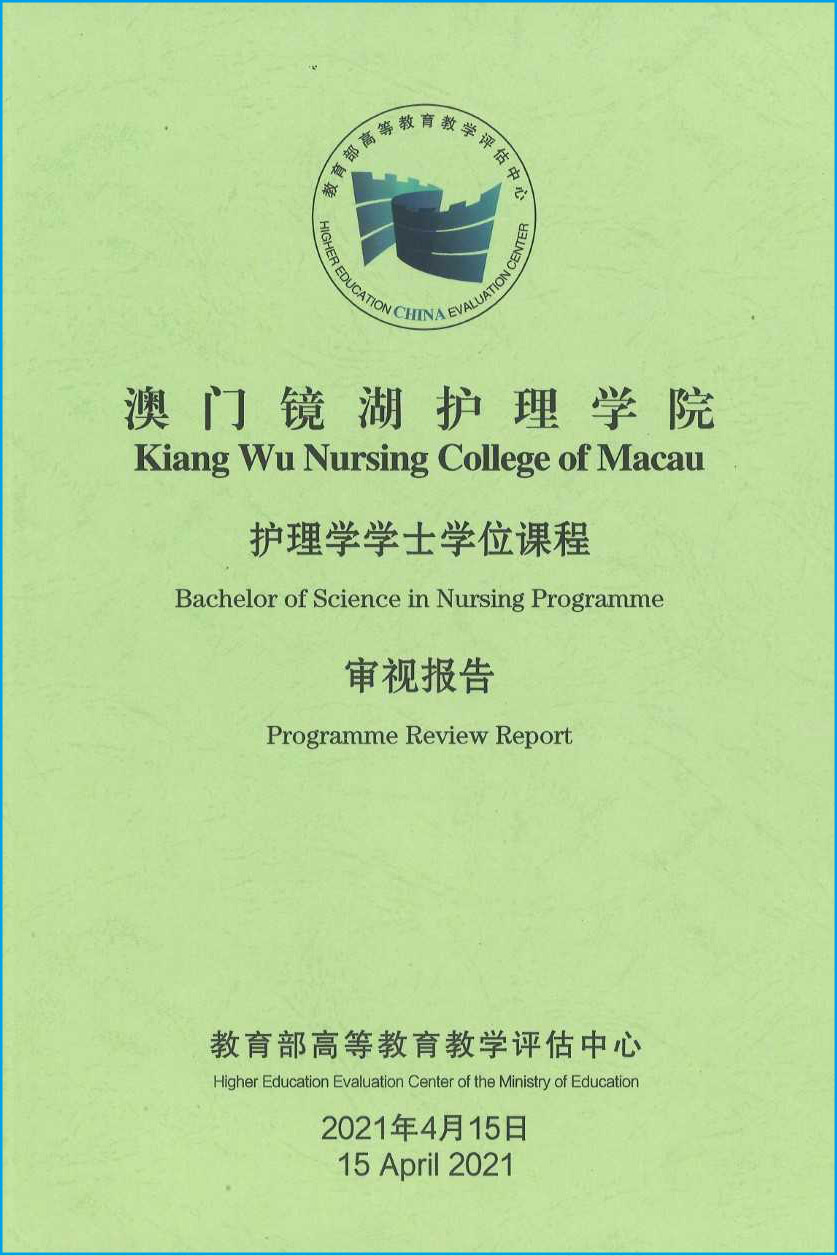
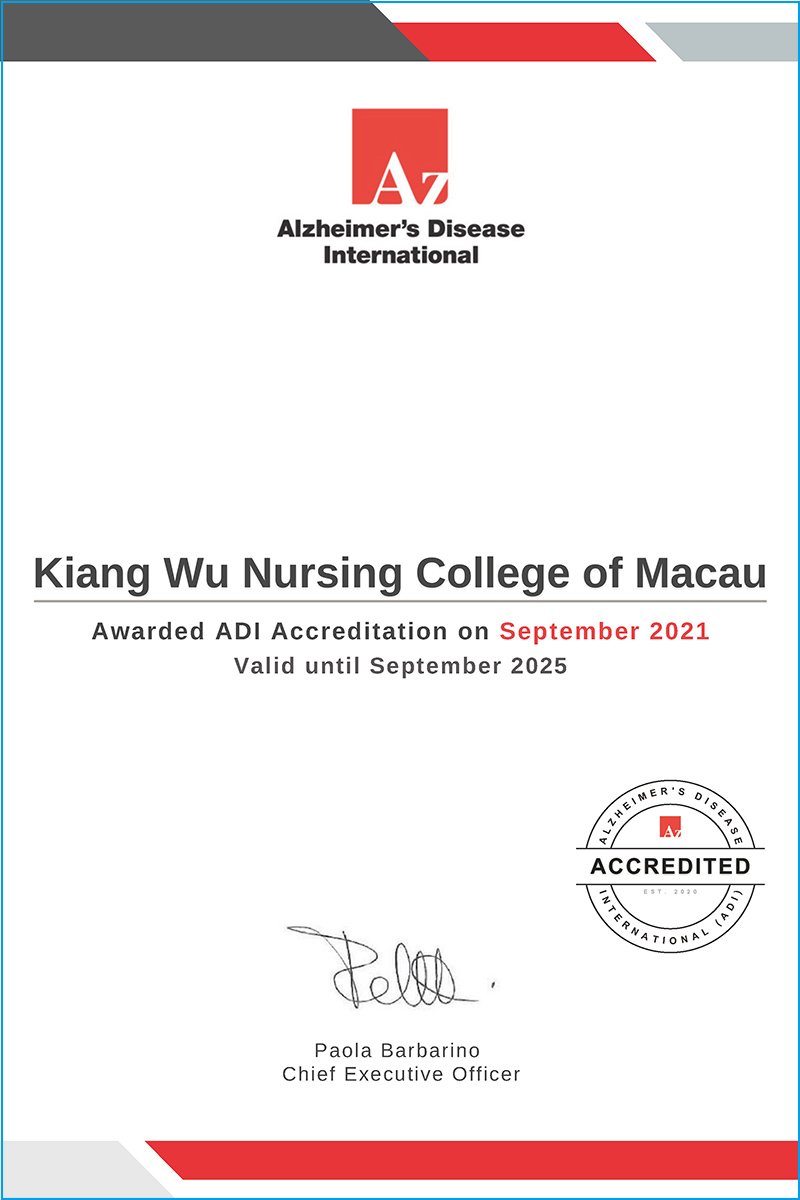
Institutional Accreditation (IA) &Nursing Education Accreditation
 |
 |
 |
| The Quality Assurance Agency for Higher Education (QAA): Institutional Accreditation |
The Motherland's Education Quality Evaluation Agency of the Ministry of Education:
Nursing Education Accreditation |
Course provider of Alzheimer's Disease International (ADI) |
Copyright © 2024 KIANG WU NURSING COLLEGE OF MACAU
