


Nursing Research
運用團隊資源降低內科加護病房中心靜脈導管相關血流感染率
A Project to Use Team Resources to Reduce the Rate of Central Catheter-Related Bloodstream Infection in Internal Medicine Intensive Care Unit
【摘要】
本專案旨在降低某院內科加護病房之中⼼靜脈導管相關⾎流感染率。根據 2021 年感染監測報告,該單位感染密度⾃第⼀季3.43% 上升至 7 ⽉的 5.63%。問題分析發現,醫護⼈員缺乏標準化教育與流程、導管移除時機評估不⾜,且未落實交叉稽核。專案改善措施包括:修訂作業指導書、辦理多元教育訓練、製作教學影⽚、導入 LINE@ 平台數位稽核機制。介入六個⽉後,感染率降至2.89%,醫師置入流程完整率、護理師照護正確率與⼈員認知皆明顯提升。結果顯⽰,結合標準化流程、跨專業合作與持續監測,能有效降低中⼼靜脈導管相關⾎流感染率,提升重症照護安全,並提供臨床推動導管照護品質改善之實證模式。
【關鍵詞】
中⼼靜脈導管;⾎流感染;加護病房;組合式照護
Abstract:
This project aimed to reduce the rate of central line-associated bloodstream infection (CLABSI) in a medical intensive care unit. According to the 2021 surveillance report, the CLABSI density increased from 3.43% in the first quarter to 5.63% by July. Root cause analysis revealed deficiencies in care standardization, catheter removal assessment, and auditing mechanisms. Improvement strategies included revising standard operating procedures, organizing educational training, producing instructional videos, and implementing the LINE@ digital audit platform. After a six-month intervention, the infection rate decreased to 2.89%. Physicians’ insertion process completeness, nurses’ care accuracy, and staff knowledge were significantly improved. These findings demonstrate that standardized care protocols, multidisciplinary collaboration, and continuous monitoring effectively reduce CLABSI, enhance patient safety in critical care, and provide an evidence-based model for clinical quality improvement in catheter care.
Keywords:
central venous catheter; bloodstream infection; ICU; care bundle
Download:
PDF
Reference:
鄭碧薇、陳素里(2025)。運用團隊資源降低內科加護病房中心靜脈導管相關血流感染率體現。澳門護理雜誌,24(1),1-8。https://doi.org/10.6729/MJN.202511_24(1).001
Cheng, P. W., & Chen, S. L. (2025). A project to use team resources to reduce the rate of central catheter-related bloodstream infection in internal medicine intensive care unit. Macau Journal of Nursing, 24(1), 1-8. https://doi.org/10.6729/MJN.202511_24(1).001
Strive for Competence and Integrity
Serve with Professionality and Care
Contact Us



 Tel: (853) 8295 6200
 Fax: (853) 2836 5204
 Email: admin@kwnc.edu.mo
Complexo de Cuidados de Saúde das Ilhas
Edifício do Instituto de Enfermagem Kiang Wu de Macau, Avenida do Hospital das Ilhas no.447, Coloane, RAEM
Permanent Campus
Est. Repouso No. 35, R/C, Macau



官網instagram


掃描二維碼關注官方微信
Institutional Accreditation (IA) &Nursing Education Accreditation
 |
 |
 |
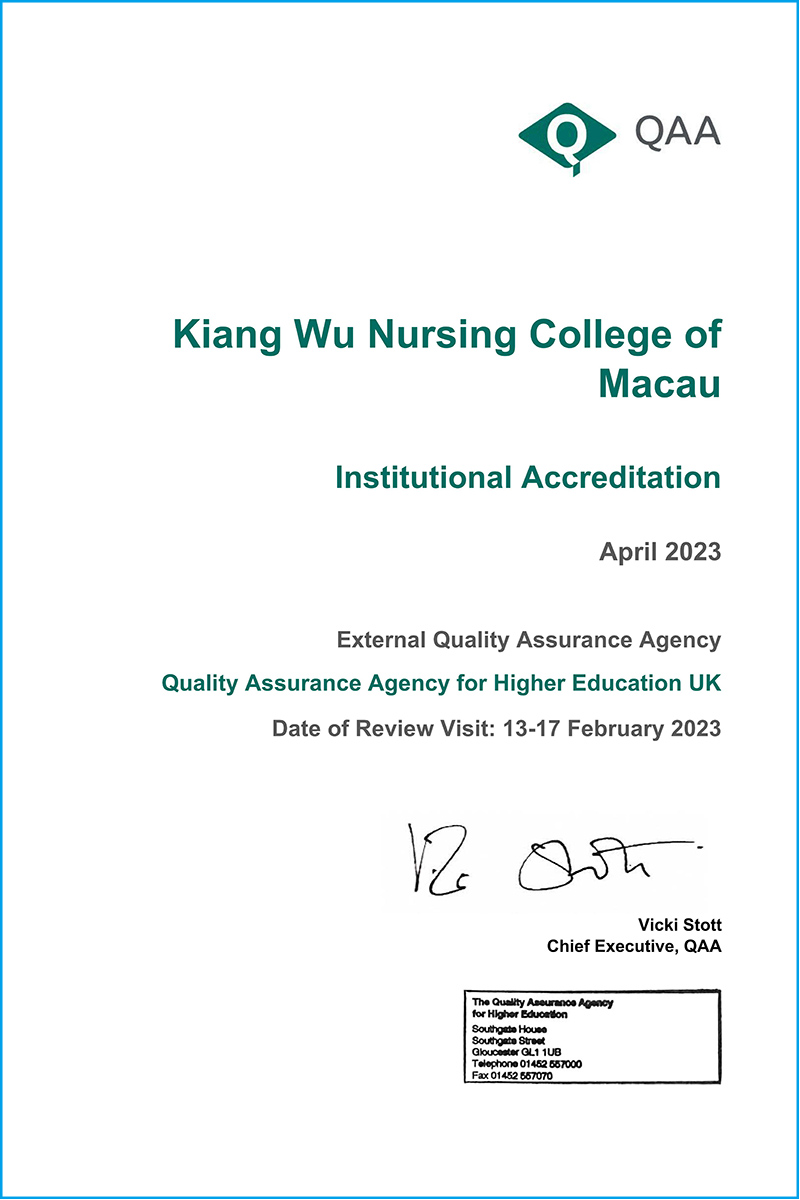
| The Quality Assurance Agency for Higher Education (QAA): Institutional Accreditation |
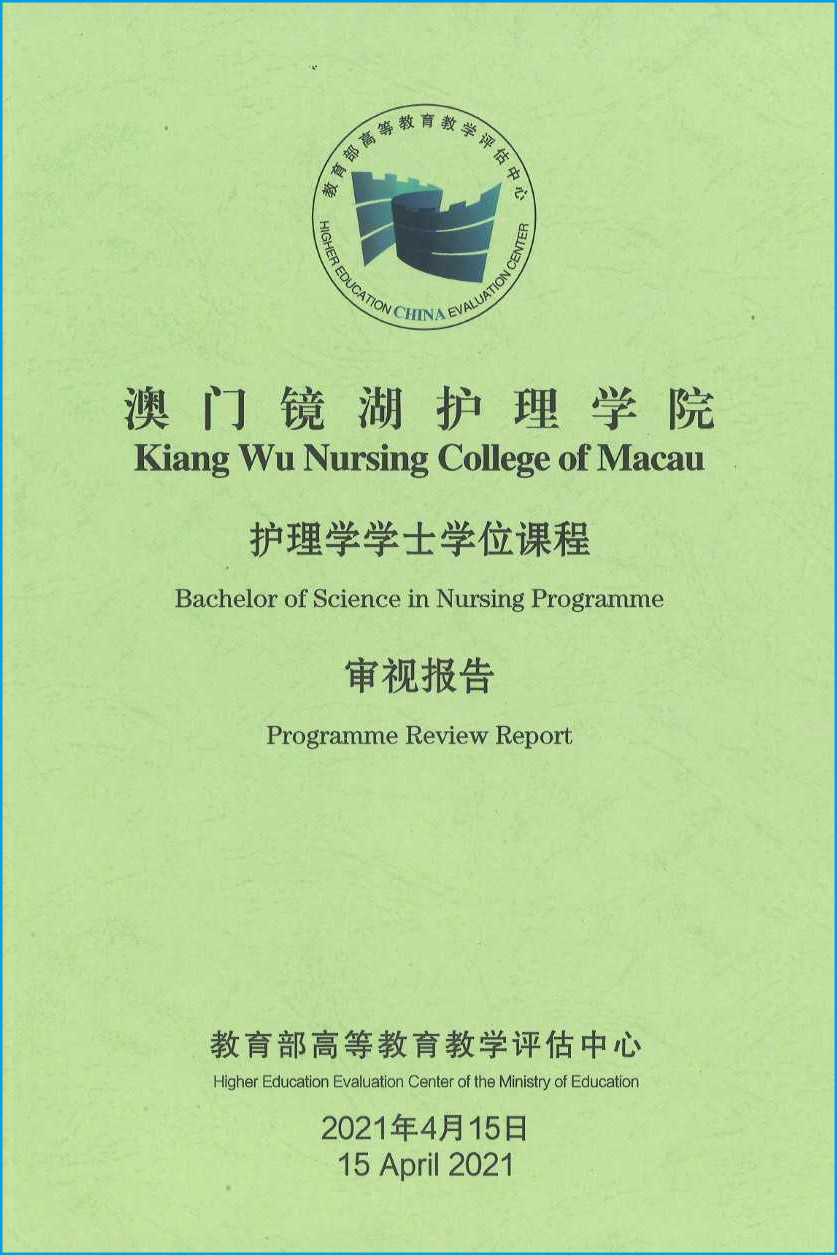
The Motherland's Education Quality Evaluation Agency of the Ministry of Education:
Nursing Education Accreditation |
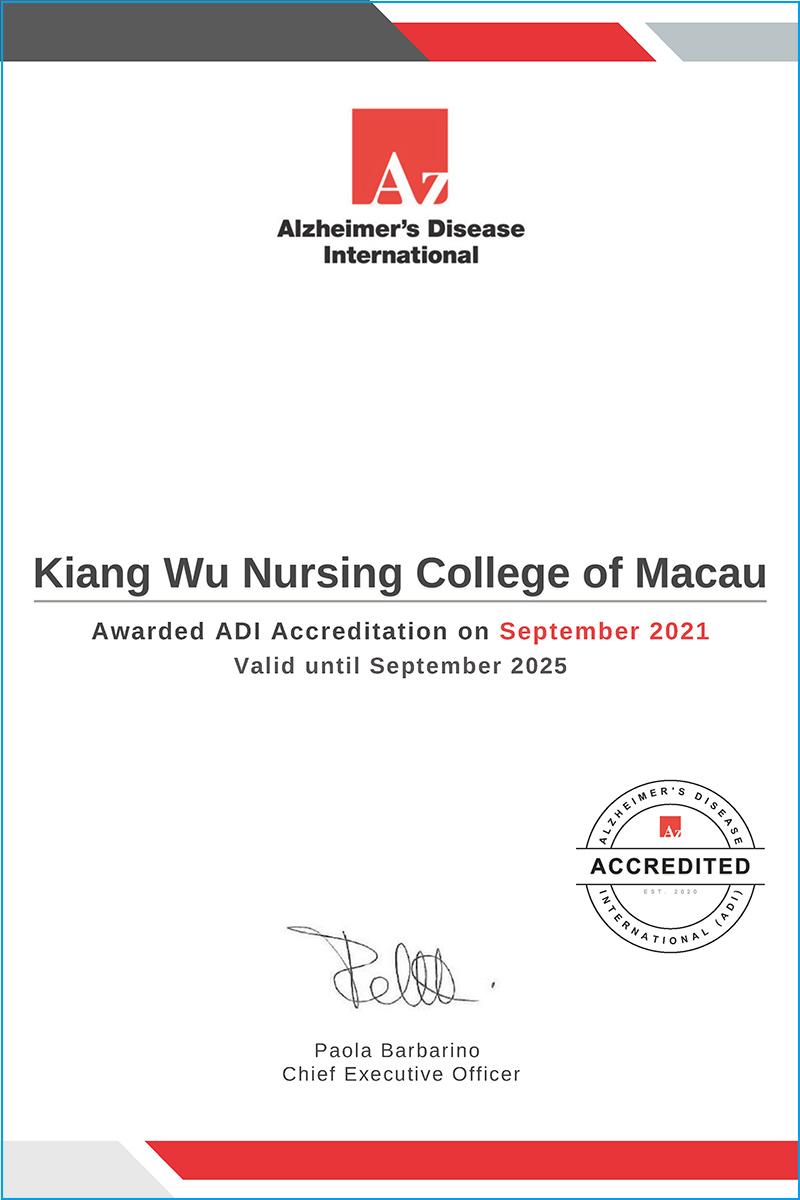
Course provider of Alzheimer's Disease International (ADI) |
Copyright © 2024 KIANG WU NURSING COLLEGE OF MACAU
